
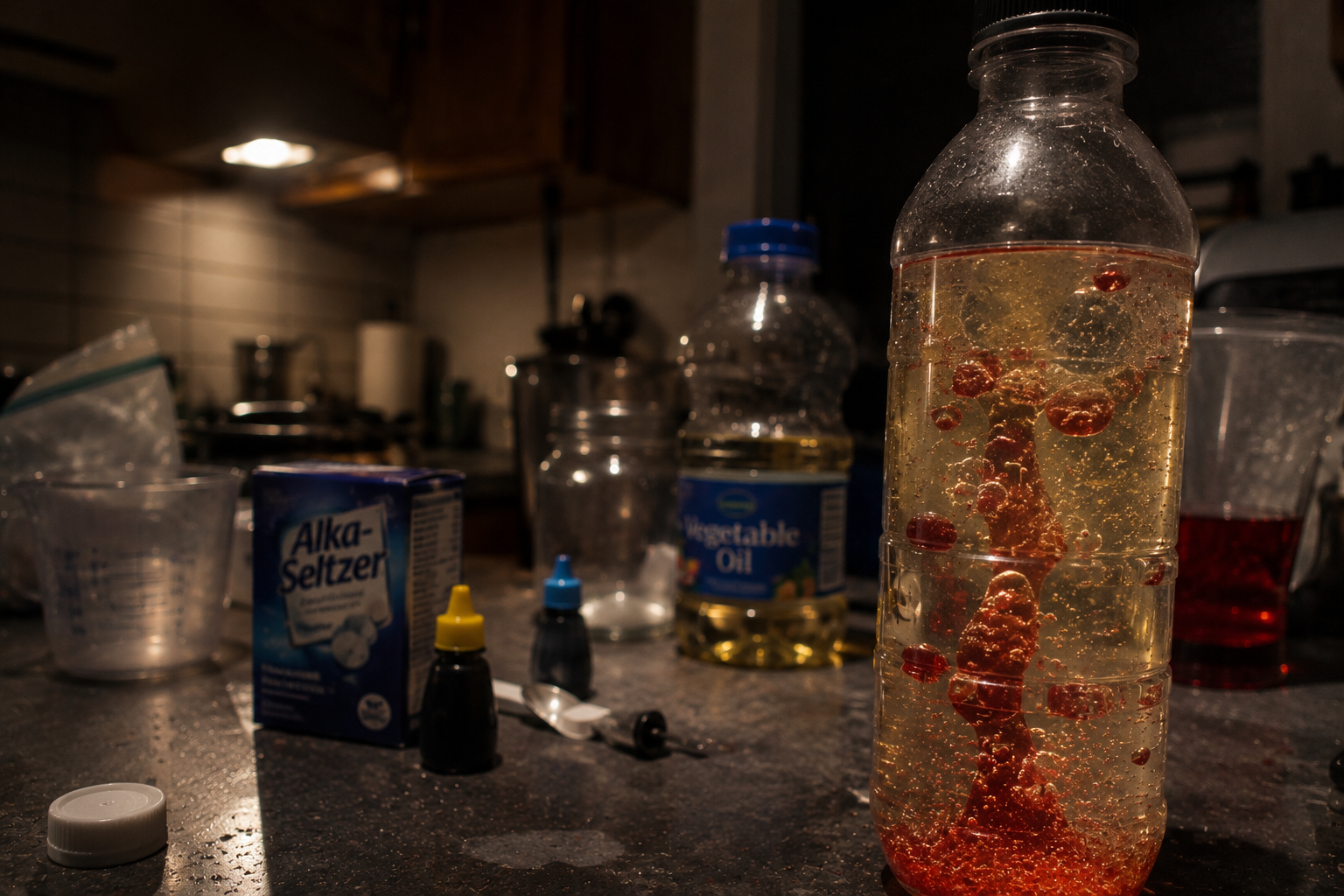
What we’re building
We’re building a calm, colorful lava lamp in a bottle, where bubbles carry colored water up like tiny elevators and then plop back down
Concepts
- Density: how much matter is packed into a space
- Immiscible liquids: liquids, like oil and water, that refuse to mix
- Carbon dioxide gas: the fizzy bubbles made by the tablet
- Observation: noticing what happens before deciding why it happens
Materials
- A clean clear plastic bottle with a cap
- Water and cooking oil
- Food coloring
- One effervescent tablet, broken into small pieces
The build
Let’s make the science happen
Take your time with each step, notice the weird little details, and remember: a wonky first try is just a build asking for its next idea
Step 1
Make a brave guess
Hold up your empty bottle and point at the water and oil. Before pouring anything, decide which one you think will sit on top. Say why, even if your reason is ‘because it looks floaty.’ A prediction is not a secret test you can fail; it is your starting idea, and the bottle is about to be your evidence machine
Which liquid gets the top bunk? Step 2
Build two liquid layers
Pour water until the bottle is about one-quarter full. Slowly add cooking oil until the bottle is almost full, leaving two finger-widths of empty space at the top. Put the bottle down and wait. Do not shake it. Watch the line between the liquids sharpen into two separate layers
Pour, then pause Step 3
Send the color to the water
Add 4–6 drops of food coloring one at a time. The drops may sit on the oil for a moment, then zoom through it and bloom into the water below. Give them time to spread before adding more. You are watching the coloring choose its water friends instead of the oil
Watch the drop travel Step 4
Wake up the bubble elevator
Break an effervescent tablet into small pieces. Drop in one piece and watch from the side. It makes carbon dioxide gas in the colored water. Each gas bubble grabs a little colored water and floats upward through the oil. At the top, the bubble pops and the colored water sinks home again
Add one small tablet piece Step 5
Change one recipe detail
Try a smaller tablet piece, then a larger one in a fresh bottle or after the fizz calms down. You can also compare a bottle with more water to one with less. Change just one detail per test, then count bubbles for ten seconds or sketch how fast they travel
Test like a lava detective Step 6
Tell the bubble story
Point to the oil layer, water layer, colored blob, and bubbles. Explain the trip out loud: gas forms, lifts colored water, pops at the top, and lets the water sink again. You do not need a giant dictionary definition. You just need to connect your words to the beautiful weird motion you watched
Use what you saw
Conclusion
What did your build teach you?
Your lava lamp is a tiny science theater: density keeps oil and water in their own layers, and gas bubbles create the up-and-down dance. Keep asking ‘what changed?’, that is how a colorful trick turns into chemistry
When it gets weird
If the bottle turns into a muddy soup, it was probably shaken or overloaded with food coloring. Let it settle, or start fresh and add the color slowly. If it will not bubble, use a new, dry tablet piece